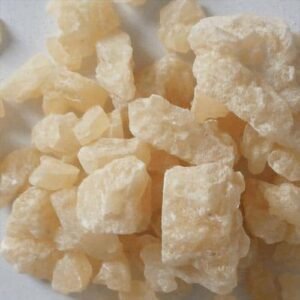

Buy Ketamine Powder Online
Ketamine Powder has been demonstrated to be sufficient in treating discouragement in patients with bipolar issue who have not responded to antidepressants. In persons with significant depressive turmoil, it forms a snappy stimulant effect, acting inside two hours instead of the few weeks are taken by ordinary antidepressants to work. Its hydrochloride salt is sold as Ketanest, Ketaset, and Ketalar. Pharmacologically, ketamine is viewed as a Nmda receptor adversary. At high, totally soothing level estimations, ketamine has similarly been found to attach to p-opioid receptors sort 2 is taught human neuroblastoma cells – regardless, without agonist development – and to sigma receptors in rats. also, ketamine chips in with muscarinic receptors, plunging monoaminergic torment pathways and voltage-gated calcium. Order now from Psychedelics online
Pain management Ketamine may be used for postoperative pain management. Low doses of ketamine may reduce morphine use, nausea, and vomiting after surgery. Ketamine has similar efficacy to opioids in a hospital emergency department setting for management of acute pain and for control of procedural pain.
It may also be used as an intravenous analgesic with opiates to manage otherwise intractable pain, particularly if this pain is neuropathic. It has the added benefit of counteracting spinal sensitization or wind-up phenomena experienced with chronic pain. At these doses, the psychotropic side effects are less apparent and well managed with benzodiazepines. Ketamine is an analgesic that is most effective when used alongside a low-dose opioid; because, while it does have analgesic effects by itself, the doses required for adequate pain relief when it is used as the sole analgesic agent are considerably higher and far more likely to produce disorienting side effects. A review article in 2013 concluded, “despite limitations in the breadth and depth of data available, there is evidence that ketamine may be a viable option for treatment-refractory cancer pain”. Order Ketamine Powder Online
Low-dose ketamine is sometimes used in the treatment of complex regional pain syndrome (CRPS). A 2013 systematic review found only low-quality evidence to support the use of ketamine for CRPS.
Why is Ketamine Used Medically?
- Ketamine can provide pain relief and short-term memory loss (for example, amnesia of a medical procedure).
- In surgery, it is used an induction and maintenance agent for sedation and to provide general anesthesia.
- It has also been used for pain control in burn therapy, battlefield injuries, and in children who cannot use other anesthetics due to side effects or allergies.
- Ketamine, through blocking at the N-methyl-D-aspartate (NMDA) site, has rapid action in controlling symptoms of depression and acute suicidal ideation.
- At normal doses, it is often preferred as an anesthetic in patients at risk of bronchospasm and respiratory depression.
Anesthesia Uses as an anesthetic:
Anesthesia in children, as the sole anesthetic for minor procedures or as an induction agent followed by muscle relaxant and tracheal intubation Asthmatics or people with chronic obstructive airway disease As a sedative for physically painful procedures in emergency departments Emergency surgery in field conditions in war zones To supplement spinal or epidural anesthesia/analgesia using low doses Since it suppresses breathing much less than most other available anesthetics, ketamine is used in medicine as an anesthetic; however, due to the hallucinations it may cause, it is not typically used as a primary anesthetic, although it is the anesthetic of choice when reliable ventilation equipment is not available.
Ketamine is frequently used in severely injured people and appears to be safe in this group. A 2011 clinical practice guideline supports the use of ketamine as a dissociative sedative in emergency medicine. It is the drug of choice for people in traumatic shock who are at risk of hypotension. Low blood pressure is harmful in people with severe head injury[ and ketamine is least likely to cause low blood pressure, often even able to prevent it.
The effect of ketamine on the respiratory and circulatory systems is different from that of other anesthetics. When used at anesthetic doses, it will usually stimulate rather than depress the circulatory system.[361 It is sometimes possible to perform ketamine anesthesia without protective measures to the airways. Ketamine is considered relatively safe because protective airway reflexes are preserved.
Ketamine is used as a bronchodilator in the treatment of severe asthma. However, evidence of clinical benefit is limited.
Do you know that Ketamine has the potential to revolutionize the therapy of complex patients conditions like depression and pain?
Ketamine is generally used as an anesthetic to induce loss of consciousness and pain relief properties.
How long the effects last and the drug stays in your system depends on how much you’ve taken, your size, whether you’ve eaten and what other drugs you may have also taken.
Taking ketamine can make you feel:
- dream-like and detached
- chilled, relaxed and happy
- confused and nauseated
- Ketamine can also alter your perception of time and space and make you hallucinate (see or hear things that aren’t there)
- Stop you feeling pain, putting you at risk of hurting yourself and not realizing it
Pharmacology of Ketamine Powder
Ketamine is a noncompetitive N-methyl-D-aspartate (NMDA) receptor antagonist, and it blocks HCN1 receptors. However, at higher doses it may also bind to the opioid mu and sigma receptors. It disrupts the neurotransmitter (brain chemical) glutamate. Glutamate is involved with learning, memory, emotion, and pain recognition. It can exhibit sympathomimetic activity which can lead to rapid heart rate and elevated blood pressure.
It is related to phencyclidine (PCP), but has less than 10% of the potency of pure PCP.
This agent is a lipid soluble compound, has an initial rapid distribution and large volume of distribution, with a half-life of 10 to 15 minutes. Secondarily, the drug distributes into peripheral tissues with a slower elimination half-life of up to 3 hours, undergoes hepatic metabolism and is excreted in the urine.
How is Ketamine Powder Abused?
In addition to its legal, medical uses, ketamine and and synthesized analogs have become drugs of abuse with hallucinogenic properties. It has also been used as a “date rape” drug.
When abused, it is typically insufflated (“snorted” up the nose) in social situations. It is also injected, consumed orally as a liquid, or smoked in marijuana or tobacco. It is frequently abused in combination with other substances, such as cocaine or amphetamines. Use with multiple drugs has been fatal.
When misused, it is often sourced via the illegal diversion of prescription products, but analogs may be found on the streets.
How Quickly Does Ketamine Powder Work?
- An injection yields a quick response, with effects occurring in seconds to minutes.
- “Snorting” leads to effects in roughly 5 to 15 minutes (this is the most common method of abuse).
- Oral consumption requires between 5 and 30 minutes.
The effects of abuse typically last 1 to 2 hours, but the users judgement, senses and coordination may be affected for up to 24 hours or longer. Sensations the user may seek include floating, stimulation and visual effects.
High doses may dangerously reduce breathing, lead to muscle spasms or weakness, dizziness, balance difficulty, impaired vision, slurred speech, nausea and vomiting, and severe confusion.
Binge use, where the user indulges in the drug in excess amounts in a short period of time has been reported, as well.
Ketamine Powder Health Hazards & Side Effects
Abuse of ketamine can be linked with short-term and long-term problems:
- Short-term: Problems with attention, learning, and memory; dreamlike states, hallucinations; sedation; confusion; loss of memory; raised blood pressure; unconsciousness; dangerously slowed breathing.
- Long-term: Ulcers and pain in the bladder; kidney problems; stomach pain; depression; poor memory.
The most common side effects associated with ketamine when used medically are nausea, vomiting, dizziness, diplopia (double vision), drowsiness, dysphoria (unease, restlessness), and confusion. There is also the risk of HIV, hepatitis, and other infectious diseases from shared needles.
Ketamine use can be fatal in people who are alcoholics or acutely intoxicated with alcohol. There are animal reports of an increased risk of toxicity when ketamine is combined with caffeine. Theoretically, this may be a concern in people who have consumed energy drinks, often done at nightclubs where ketamine may be abused.
The intensity of side effects are related to the dose of the drug consumed. Reported side effects may include: